
Ticks
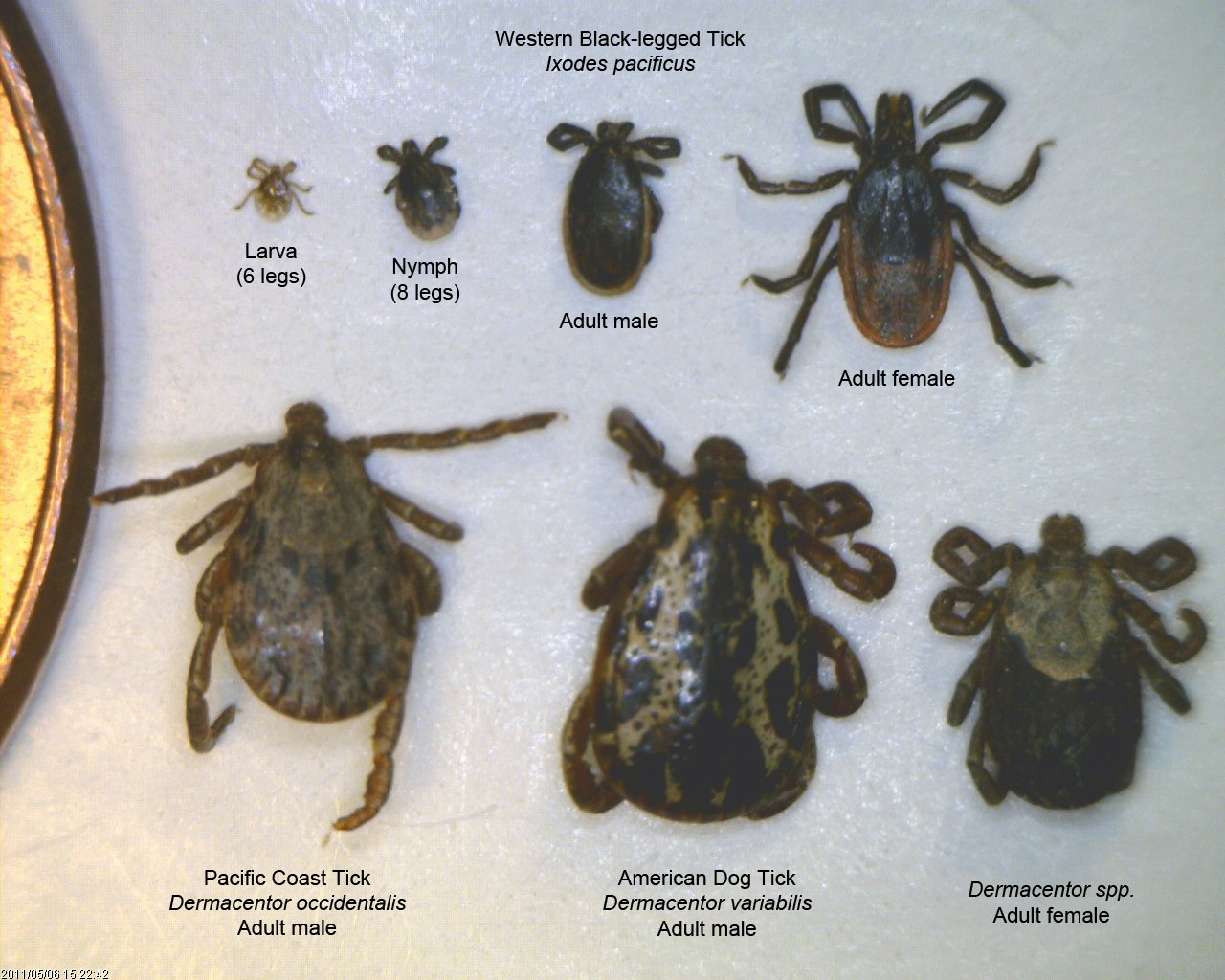
Ticks are parasitic arachnids that require blood for their development. Adult ticks are easily distinguished from insects based on the number of legs and body regions present. Adult insects have six legs and three major body regions, while adult ticks have eight legs and two major body regions.
Life cycle & habitat
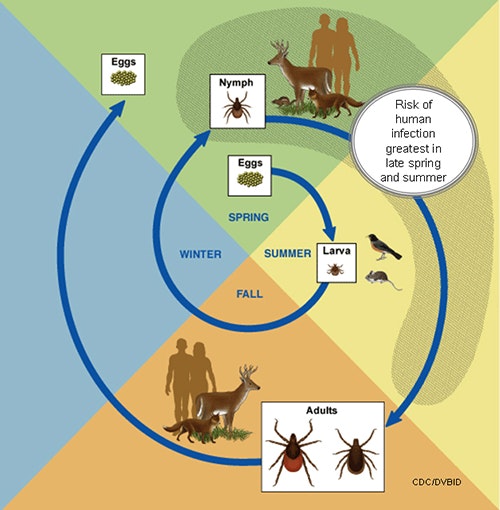
Ticks are active year-round in Marin and Sonoma counties. Adult female ticks lay eggs that hatch into six-legged larvae. The larvae develop into eight-legged nymphs and eventually into adults. Typically, each active life stage feeds on a separate host animal. Ticks are widespread and are commonly encountered by those who spend time outdoors- especially hikers and people with dogs. Adult ticks are commonly found in high grass, while nymphs are found in leaf litter, on logs and wooden benches in natural areas.
Impact on human health
- Ticks are capable of transmitting a wide variety of protozoan, bacterial, viral and fungal pathogens. For more information about the various diseases that ticks have been known to transmit in California, please visit the California Department of Public Health Tick-Borne Diseases webpage.
- Lyme disease is one tick-borne disease of local concern.
Control
- The District does not have a chemical control program for ticks, and residents may contract with a private pest control company to incorporate a chemical control program on their property.
- For more information on chemical control of ticks and landscaping practices that may reduce tick prevalence, please refer to the Tick Management Handbook.
Tick testing
- Sonoma County Department of Health Service- Public Health Division (fee-based service)
- Marin Health and Human Services- Public Health Laboratory (fee-based service)
Useful Links
Canine Vector-Borne Disease (CVBD) Page: Tick-Borne Diseases
- Recommendations for pet owners
- Information about tick-borne diseases
- Information for health professionals
- Educational materials for teachers and students about ticks
- Information about how to avoid ticks and what to do if you've been bitten
- Information on the geographic distribution of ticks, life cycle of ticks, and diseases transmitted by ticks
- Detailed resource on all aspects of tick management
- Landscape management recommendations
- Information about chemical control of ticks
MSMVCD Tick Bite Prevention Video
- Detailed information regarding tick bite prevention techniques
Sources:
Furman, D.P. & Loomis, C. L. (1984). The Ticks of California (Acari: Ixodida). Berkeley and Los Angeles, CA: University of California Press.
Lane, R.S. (2008). Pest Notes: Lyme Disease in California. Davis: Univ. Calif. Agric. Nat. Res. Publ. 7485.
Mullen. G.R. & L.A. Durden. (2009). Medical and Veterinary Entomology, 2nd ed. Burlington, MA: Academic Press.
Padgett, K. A., & Lane, R. S. (2001). Life Cycle of Ixodes pacificus (Acari: Ixodidae): Timing of Developmental Processes Under Field and Laboratory Conditions. Journal of Medical Entomology, 38(5), 684-693.
Tick-Borne Diseases. (2016). Retrieved September 19, 2016, from http://www.cdph.ca.gov/HEALTHINFO/DISCOND/Pages/TickBorneDiseases.aspx
